

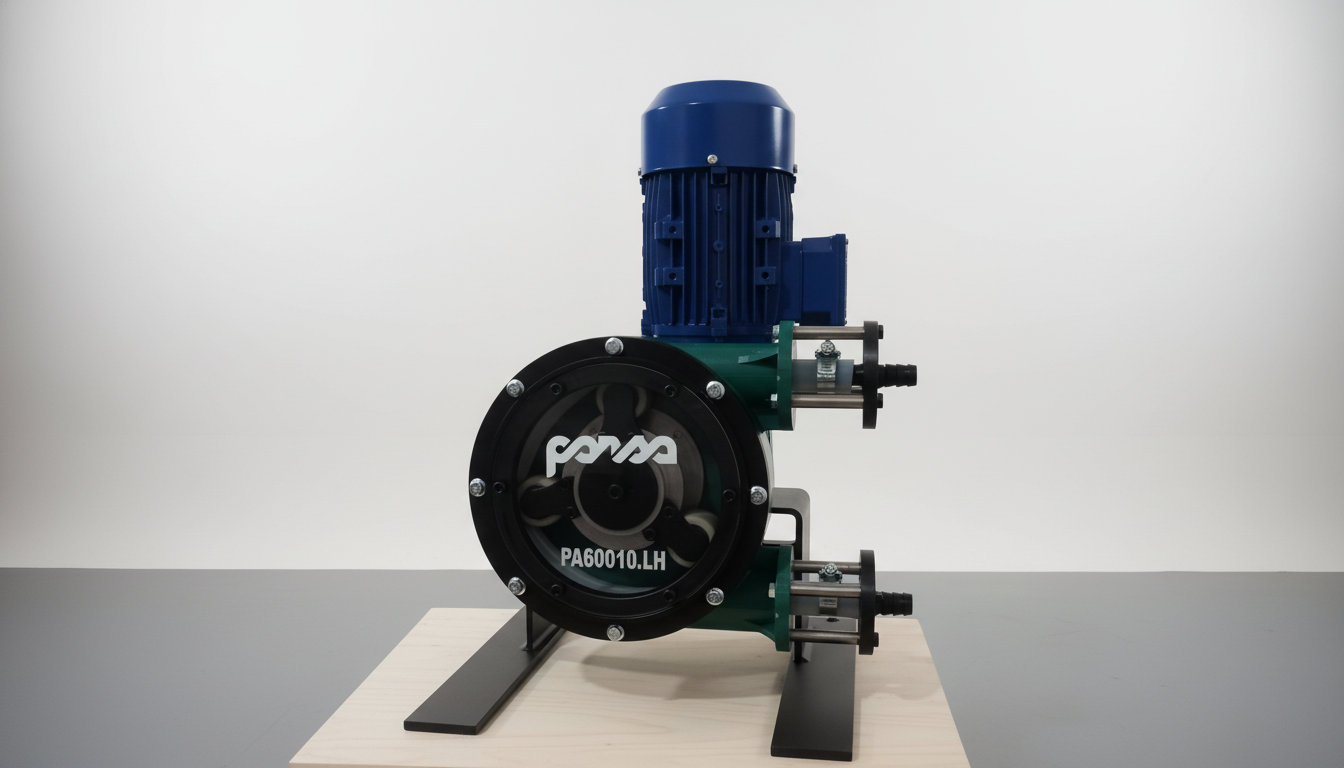
Industrial Peristaltic Pump Pricing Factors
Conveying aggressive, slurry-filled, or highly viscous chemical liquids is challenging. Peristaltic hose pumps represent a reliable solution. While their initial capital cost is higher than centrifugal units, their lifecycle cost is much lower. Here, we analyze the engineering parameters that drive peristaltic pump pricing.
1. Casing Size and Machining Tolerances
The physical size of the pump casing (governed by the hose inner diameter from 10mm to over 100mm) is a primary cost factor. Heavy cast-iron casings designed to withstand up to 16 bar operating pressure require thick walls. Precise CNC machining of the internal rotor track ensures even compression, which increases production costs but extends hose lifespan. Larger dimensions require high casting volumes.
casings also house the lubricant pool. High-quality casings feature integrated drain ports, leak detection access points, and durable paint systems to resist external chemical spills in processing plants. Casing integrity prevents leaks from reaching surroundings.
2. Gearbox and Motor Specifications
Peristaltic pumps run at low speeds (typically under 50 RPM) to prevent frictional heat damage to the rubber hose. Slower speeds require high-torque reduction gearboxes. A premium helical inline or shaft-mounted gearbox represents a large portion of the overall assembly cost but prevents gear failures under heavy loads. Helical gearings offer high mechanical efficiency.
The motor class also affects price. Applications in hazardous chemical areas require explosion-proof (ATEX-rated) electric motors, which are more expensive than standard industrial motors but ensure site safety. Motor enclosures govern the initial capital cost.
3. Hose Construction and Reinforcement
Peristaltic hoses are composite structures. Simple extruded tubes are cheap but fail under pressure. Industrial hoses feature woven textile reinforcement layers. Specialty materials like CSM or FDA NBRF food-grade rubber increase hose manufacturing costs but are required for specific chemical paths. Woven wraps secure pressure limits up to 16 bar.
Using a domestic supplier like Parsa Group ensures replacement hoses are available without shipping delays, reducing spare parts inventory costs for plant operators. Local support ensures continuous chemical feeds.
4. Return on Investment (ROI)
Although the initial cost of a peristaltic pump is higher than a diaphragm or centrifugal pump, the reduction in mechanical seal rebuilds, shaft repairs, and downtime offsets the initial investment within a few months of continuous duty. Procurement teams should evaluate total lifecycle costs. Downtime reductions offset higher capital costs rapidly.
5. Conclusion
Parsa Group's peristaltic pumps offer reliable performance at a competitive price. Contact our sales department to receive a technical quote for your specific flow and chemical parameters.