

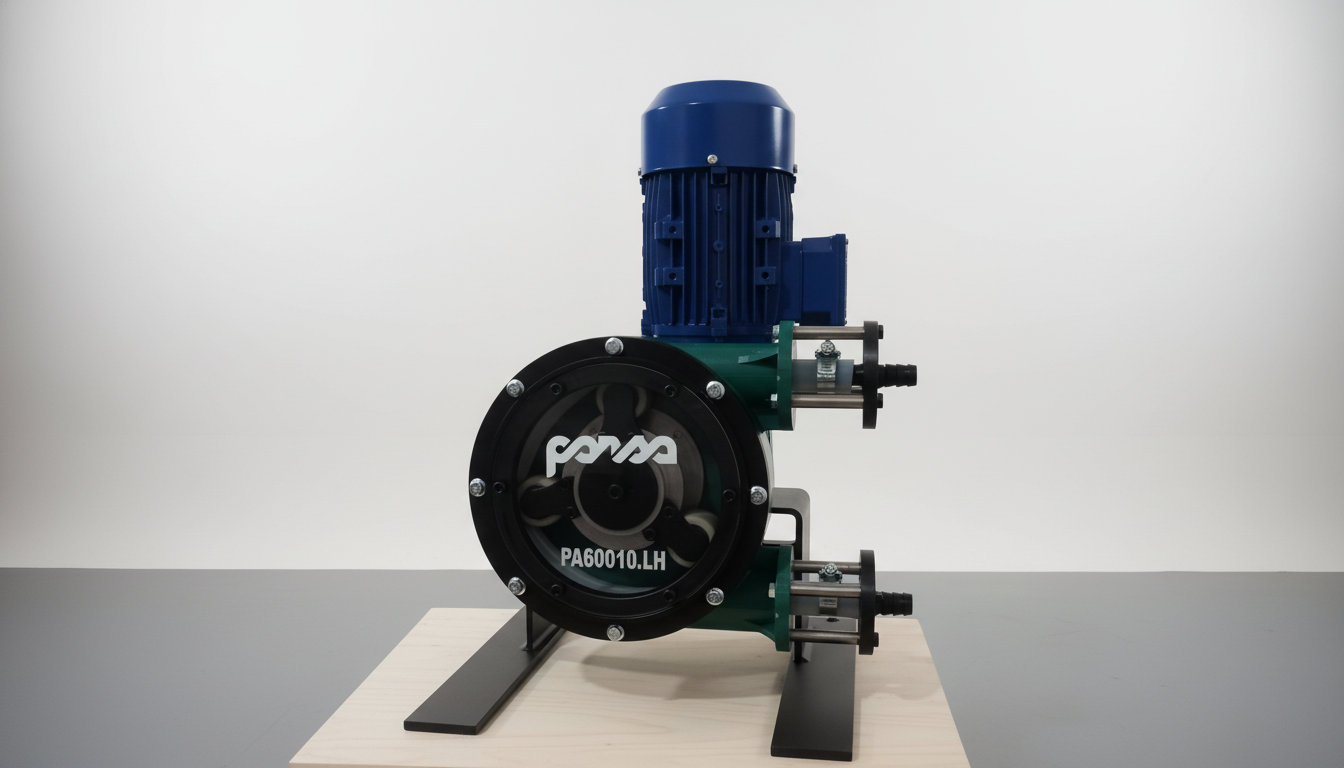
Diagnostic Guide for Troubleshooting Peristaltic Hose Pumps
Peristaltic hose pumps are known for their mechanical simplicity and operational reliability. However, issues like reduction in flow rate, overheating casing layouts, line pulsations, and premature hose failures can occur. Troubleshooting requires understanding the interaction between the rotor shoes, casing, lubricant, and fluid properties. This technical guide provides a systematic approach to diagnosing and resolving these common operational challenges.
1. Troubleshooting Flow Rate Reduction and Volumetric Slip
A sudden or gradual drop in flow rate is often caused by three main factors:
Volumetric Slip due to Under-occlusion: If the rotor shoes do not compress the hose fully, pressurized fluid slips back toward the suction side. The solution is to check the gap between the shoe and the casing wall and place thin metal shims behind the shoes to achieve complete occlusion. Shimming resolves backflow slip immediately.
Hose Restoring Limitation with High-Viscosity Fluids: Viscous fluids require more time to fill the hose chamber. If the speed is too high, the hose gets squeezed before filling completely, leading to starvation. The solution is to reduce the RPM (below 30 RPM) and use larger suction line piping. Slower rotations yield complete volumetric chamber fills.
Suction Line Leaks: Small air leaks in the inlet pipe fittings prevent the vacuum from drawing fluid. Inspect all gaskets and tighten coupling clamps to restore the suction vacuum lift. Proper sealing maintains the pressure differential.
2. Preventing Early Hose Failures and Mechanical Wear
While the hose is a wearing part, early failure indicates operational or design issues:
Thermal Degradation: Compression cycles generate heat. Low lubricant levels in the casing increase friction and cause cracking. Casing grease levels should be checked monthly. Lubrication prevents frictional rubber failure.
Over-pressure Operation: Running above the rated pressure strains the textile reinforcement layers. Installing a pressure transmitter and pressure relief valve prevents overload from downstream pipe blockages. Pressure stabilization protects the fabric layers.
Chemical Swelling: Installing a hose material that is incompatible with the fluid (such as Natural Rubber for oils) causes swelling and early failure. Match the polymer (NR, EPDM, NBR) with the fluid properties before installation. Compatibility checks prevent polymer matrix swelling.
3. Minimizing Pipeline Pulsations and Vibrations
The positive displacement action of peristaltic pumps creates flow pulsations. These pulsations can vibrate pipes and loosen fittings. To minimize this, use flexible hoses on the suction and discharge ports, install pulsation dampeners, and ensure the pump base is anchored securely to a concrete foundation. Secure anchors protect the structural assembly.
4. Casing Protection and Motor Security
Integrating safety sensors reduces damage during failures. Casing leak detection probes cut off motor power the moment fluid is detected. Over-current breakers and thermal overloads protect the motor windings if the discharge line is blocked and the rotor stalls.
5. Conclusion
Following troubleshooting and preventative schedules extends the operational life of Parsa Group's peristaltic pumps. We provide operator training and support to help plants maintain stable production cycles. Local parts availability ensures minimal downtime.