

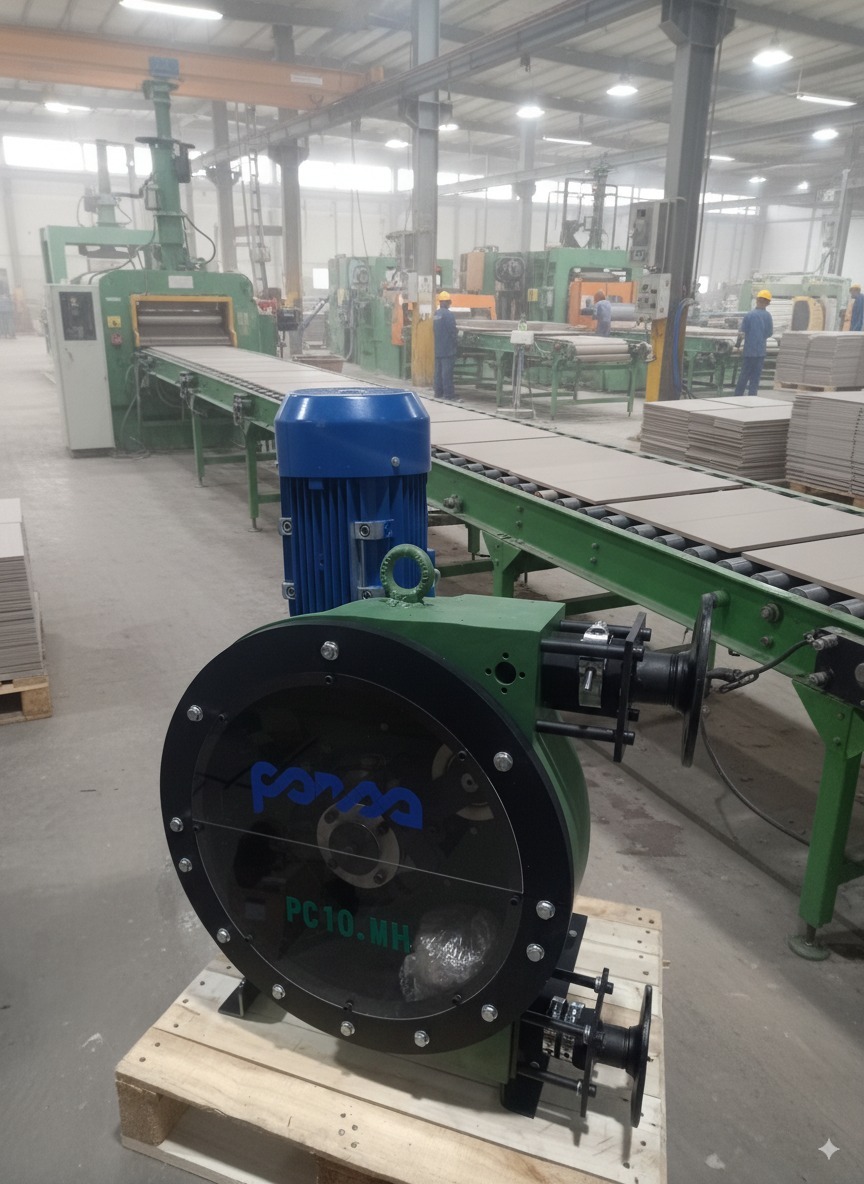
Handling Dense Slurries in Mineral Processing
Mining operations require pumping abrasive, thick underflows that destroy mechanical seals and cause centrifugal impellers to wear out in weeks. Peristaltic pumps solve these issues by isolating the fluid within the hose. Here, we analyze their mining applications.
1. Abrasion Resistance with Natural Rubber Hoses
In peristaltic pumps, solid particles in the slurry press against the flexible rubber wall of the Natural Rubber (NR) hose. The rubber absorbs the impact without scraping, allowing solids to pass without wearing the metal parts. Flow rates remain constant over time, unlike centrifugal pumps where impeller wear causes drop-offs. NR's long chain fibers give it extreme tear resistance under load.
Our mining series features heavy-duty casings to withstand hydraulic shocks in long pipeline layouts. They are suitable for copper, iron ore, and gold mining underflows. Strong anchor plates secure the casing against piping vibration.
2. High Solid Concentration and Seal-less Operation
Centrifugal slurry pumps require seal-flushing water to keep particles out of the seals, which dilutes the slurry. Peristaltic pumps operate completely water-free, maintaining a solid concentration of up to 80% weight. This reduces water consumption, which is critical in arid mining regions like Kerman and Yazd. Dry operation is preserved.
Maintaining solid density also improves downstream processes, such as thickener filtration and tailing disposal systems, by reducing water recycling costs. Denser underflow yields better filter cake separation in the pressing cycle.
3. Filter Press Feeding Efficiency
Feeding filter presses requires a pump that can handle high pressure as the press fills. A peristaltic pump increases discharge pressure naturally without losing flow, providing dry cakes and shorter process times. This improves the separation of liquid and solid phases. Drier cakes are easier to transport and stockpile.
4. Dry Running and Volumetric Self-Priming
Fluctuating feed streams can cause pumps to run dry. Centrifugal pumps will suffer seal damage quickly under these conditions. Peristaltic pumps can run dry continuously without wear. The self-priming vacuum lift ensures they resume pumping as soon as fluid is available. Unattended operation is secure.
5. Conclusion
Parsa Group's peristaltic pumps offer reliable performance in harsh mining conditions. With local manufacturing, we secure the supply of replacement hoses and parts, reducing downtime for mining plants in Iran.