

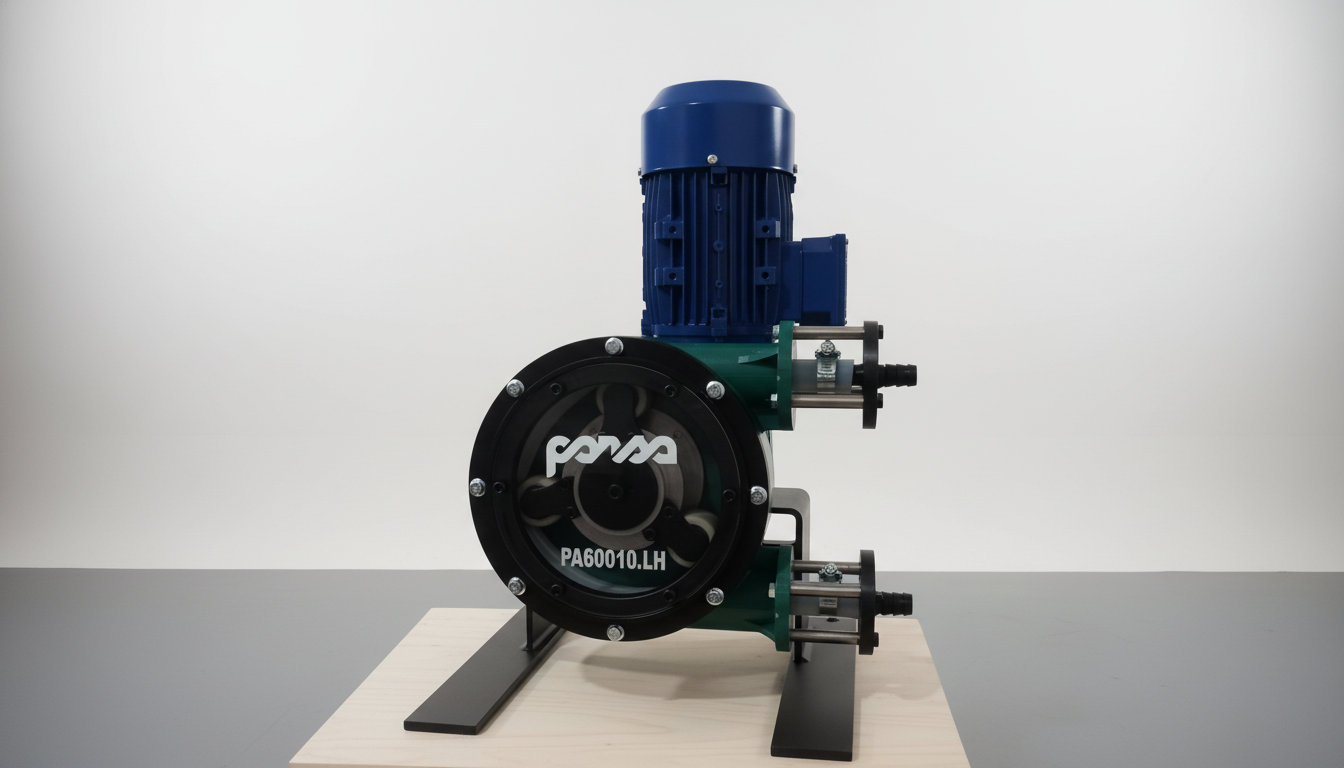
Peristaltic vs. Diaphragm Pumps: Technical Comparison
In chemical processing, wastewater management, and metallurgy, choosing between peristaltic and diaphragm pumps is critical. Both are positive displacement designs, but their wetted paths and valve configurations suit different duties. Here, we analyze their engineering differences to help you select the right pump.
1. Valve Configuration and Solid Passages
Diaphragm pumps rely on ball-check valves at the suction and discharge ports. When slurry contains sand, grit, or crystals, particles get trapped between the ball and seat, stopping the flow. Peristaltic pumps are valve-less, providing a straight-through path. Solids up to 25% of the hose's inner diameter pass easily. This minimizes blockages and down-time in mining operations. The open path is a clear design advantage.
The straight flow path also prevents product shear, which is crucial for sensitive food and chemical emulsions. Diaphragm pumps compress fluid with sudden reciprocating motion, which can break down complex polymers or emulsions. Peristaltic rollers apply smooth, continuous compression, maintaining fluid integrity. Volumetric efficiency is preserved even under high solid loads.
2. Maintenance and Total Lifecycle Costs
Replacing a worn hose in a peristaltic pump takes about 10 minutes and does not require disconnecting the piping. Rebuilding a diaphragm pump involves replacing the diaphragm, seats, ball-valves, and O-rings, which requires removing the pump from the line and handling aggressive chemicals. This leads to higher maintenance costs and longer downtime.
Additionally, AODD (Air-Operated Double Diaphragm) pumps require compressed air. Generating compressed air is an inefficient energy transfer process. Parsa Group's peristaltic pumps are driven by high-efficiency electric gearmotors, reducing energy consumption by up to 40% compared to pneumatic systems. This translates to direct operational cost savings.
3. Dosing Accuracy and Flow Pulsation
Peristaltic pumps deliver a linear flow rate directly proportional to rotor RPM. Using a Variable Frequency Drive (VFD) allows for precise control, making them ideal for chemical dosing. Diaphragm pumps are sensitive to air supply pressure fluctuations, which can affect flow stability and dosage accuracy. Precision is guaranteed through linear RPM steps.
While both pumps generate pulsations, peristaltic units with multiple rollers or dampeners provide a smoother flow. This reduces piping stress and fatigue in downstream valves and fittings, preventing line failures. Smooth operations enhance piping integrity.
4. Return on Investment (ROI)
The initial purchase cost of a peristaltic pump is higher than a diaphragm pump, but the reduction in spare parts inventory and downtime offsets the initial investment within a few months of continuous duty. Procurement teams should evaluate total lifecycle costs. A proper investment guarantees system security.
5. Conclusion
For abrasive slurries, viscous chemicals, and applications requiring precise dosing, peristaltic pumps offer better reliability and lower maintenance. Parsa Group manufactures a range of industrial hose pumps in Iran, providing local engineering support and fast spare parts delivery to secure your plant operations.