

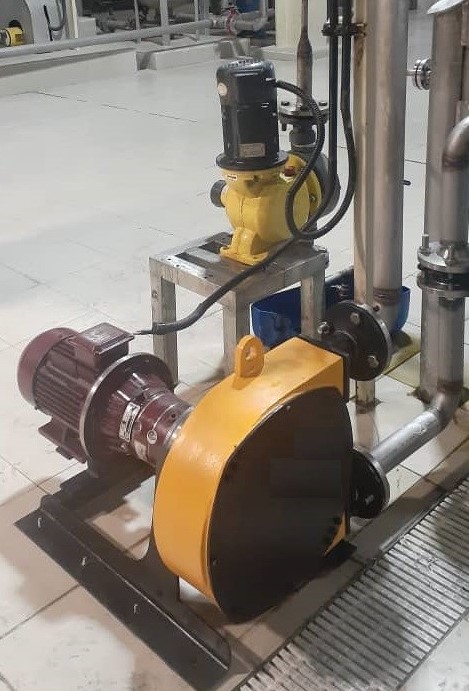
Hose Material Selection Guide for Peristaltic Pumps
The flexible hose is the single wearing component of a peristaltic pump and serves as the heart of the system. Choosing the incorrect elastomer compound can lead to chemical degradation, rapid swelling, or mechanical fatigue, shutting down production. Here is how to evaluate elastomer properties for your chemical transfer loop.
1. Elastomer Compounds: NR, EPDM, NBR, and Silicone
Natural Rubber (NR) offers excellent elasticity and mechanical resilience, making it ideal for abrasive slurries and sand suspensions in mining. EPDM exhibits high chemical resistance against concentrated acids and alkalis, with temperature limits up to 90°C. Nitrile (NBR) is recommended for oils, greases, and fuel transfer, while NBRF food-grade is FDA-compliant for food processing. Silicone provides high biological safety, making it suitable for sterile pharmaceutical dosing. Selecting the right compound prevents chemical degradation. NR is a key element for slurry paths.
Chemical concentration and temperature must be considered. A chemical that EPDM resists at 20°C may attack it at 80°C. Operators should consult compatibility charts before installing a hose in aggressive applications. Temperature thresholds dictate EPDM lifespan, especially under hot acidic paths.
2. Hose Reinforcement and Dimensions
Industrial hoses feature multi-layer textile reinforcements to withstand backpressure up to 16 bar. The inner layer is the wetted elastomer, followed by textile layers, and a outer rubber cover. Parsa Group's hoses are machined to strict tolerances, ensuring even compression by the shoes, which extends service life. Uneven thickness causes premature failure. Woven braids prevent bursting under pressure.
Hose thickness also affects suction capability. Thick-walled, reinforced hoses provide the restoring force needed to generate up to 9.5 meters of water suction lift, allowing for dry priming in deep tanks. Suction vacuum remains a core parameter.
3. Lubrication and Friction Control
Frictional heat from compression is a primary factor in hose wear. Using silicone grease inside the pump casing dissipates heat and reduces wear on the outer cover. Lubricant levels should be monitored weekly to prevent dry running, which can cause cracking and failure. Silicone oil provides superior cooling.
The lubricant must be chemically compatible with the hose material. Using hydrocarbon-based oils on natural rubber will dissolve the polymer, leading to hose failure. Always use silicone-based lubricants. Chemical compatibility ensures rubber integrity.
4. Preventive Shimming and Occlusion Calibration
Adjusting the gap between rollers and the casing is critical. Shims placed behind the rollers calibrate the occlusion thickness. Over-compression strains the textile fibers of the hose. Under-compression allows backflow (slip), eroding the inner hose lining. Proper shimming balances occlusion with wear. Calibrating the occlusion extends hose life. Shimming prevents early delamination failures.
5. Conclusion
Selecting the correct hose compound ensures process safety and efficiency. Parsa Group maintains an inventory of NR, EPDM, and NBR hoses in Tehran, securing supply lines for Iranian chemical and mining operations.