

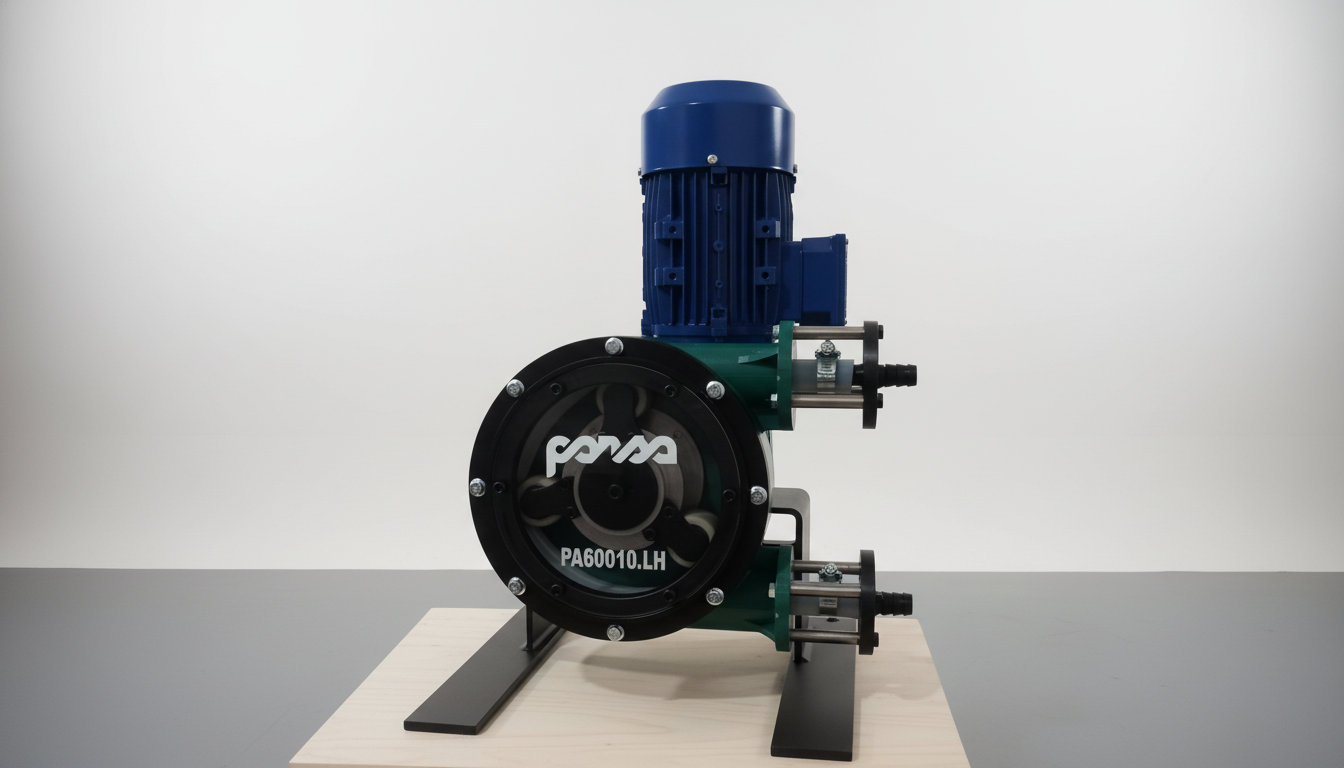
Applications of Peristaltic Hose Pumps in Wastewater Utilities
Wastewater treatment plants handle highly abrasive, solid-laden, and chemically corrosive liquids on a daily basis. Standard pump configurations, such as centrifugal, piston, or progressive cavity pumps, struggle under these conditions due to mechanical seal failures, valve clogging, and high wear rates. Peristaltic hose pumps, with their seal-less and valve-less design, offer the most reliable positive displacement solution for chemical dosing and sludge transfer. This technical guide reviews their key application areas.
1. High-Accuracy Chemical and Polymer Conditioning
A critical stage in sewage processing is flocculation, where polymers, alum, and lime milk are injected to bind suspended organic solids. These reagents are highly viscous and crystallize easily, clogging the check valves of diaphragm dosing pumps. Peristaltic pumps feature a straight-through wetted flow path with zero valves, enabling smooth polymer transfer without resistance. Volumetric displacement, directly proportional to rotor RPM, provides high dosing accuracy. This accuracy ensures stable chemical consumption.
Lime milk containing abrasive calcium carbonate particles erodes standard valve seats. In Parsa's roller-driven pumps, these abrasive crystals are confined within the rubber hose, preventing contact with metal components. This minimizes wear and stabilizes flow rates. Maintaining flow stability is a vital parameter for dosing loops, ensuring no over-chemical addition takes place.
2. Overcoming Vapor Lock with Sodium Hypochlorite Dosing
Sodium hypochlorite (bleach) is used for final effluent disinfection. It decomposes naturally, releasing oxygen bubbles. In reciprocating dosing pumps, gas accumulation prevents the valves from sealing, causing vapor locks that stop the dosing cycle. Peristaltic pumps vent these gas bubbles along with the fluid, maintaining continuous operation without manual venting. Constant disinfection performance is achieved.
This dry self-priming capability ensures disinfection standards are met, avoiding environmental compliance violations and legal penalties. Installing our LH-series roller pumps removes this operational risk. The constant purging of gas pockets from the line guarantees the discharge lines remain highly active without requiring manual bypass loops.
3. Transferring Dense Thickener Underflow Sludge
Organic solids settle at the bottom of thickener tanks as heavy, high-density sludge (up to 50% solids by weight). Standard pumps fail to handle this viscous medium. Parsa's industrial hose pumps utilize high-torque gearmotors and reinforced Natural Rubber (NR) hoses to move thick sludge to dewatering systems like filter presses. As the press chambers fill, the positive displacement action increases discharge pressure to produce drier filter cakes. drier cakes lower disposal handling costs.
The abrasion resistance of our natural rubber hoses allows sand, grit, and organic debris to pass without tearing the carcass, ensuring several thousand hours of operation before hose replacement is required. The heavy-duty rotor shoes distribute friction evenly, preventing localized delamination failures.
4. Preventative Maintenance and Shimming Protocols
Since utility plants run continuously, scheduled maintenance checks are necessary. This includes monthly lubricant monitoring, shimming roller gaps to maintain occlusion, and testing the leak detection probe. EPDM hoses are installed for acidic chemical lines, offering chemical stability up to 90°C, while leak sensors protect the casing and rotor from fluid exposure during hose bursts.
5. Conclusion and Localized Supply Security
Upgrading wastewater facilities to Parsa Group's peristaltic pumps lowers maintenance costs and reduces downtime. Our local manufacturing facility in Iran secures a steady supply of replacement hoses and parts, helping municipal and industrial plants run reliably.